October Migration: Feeding Frenzy in Central Chiapas
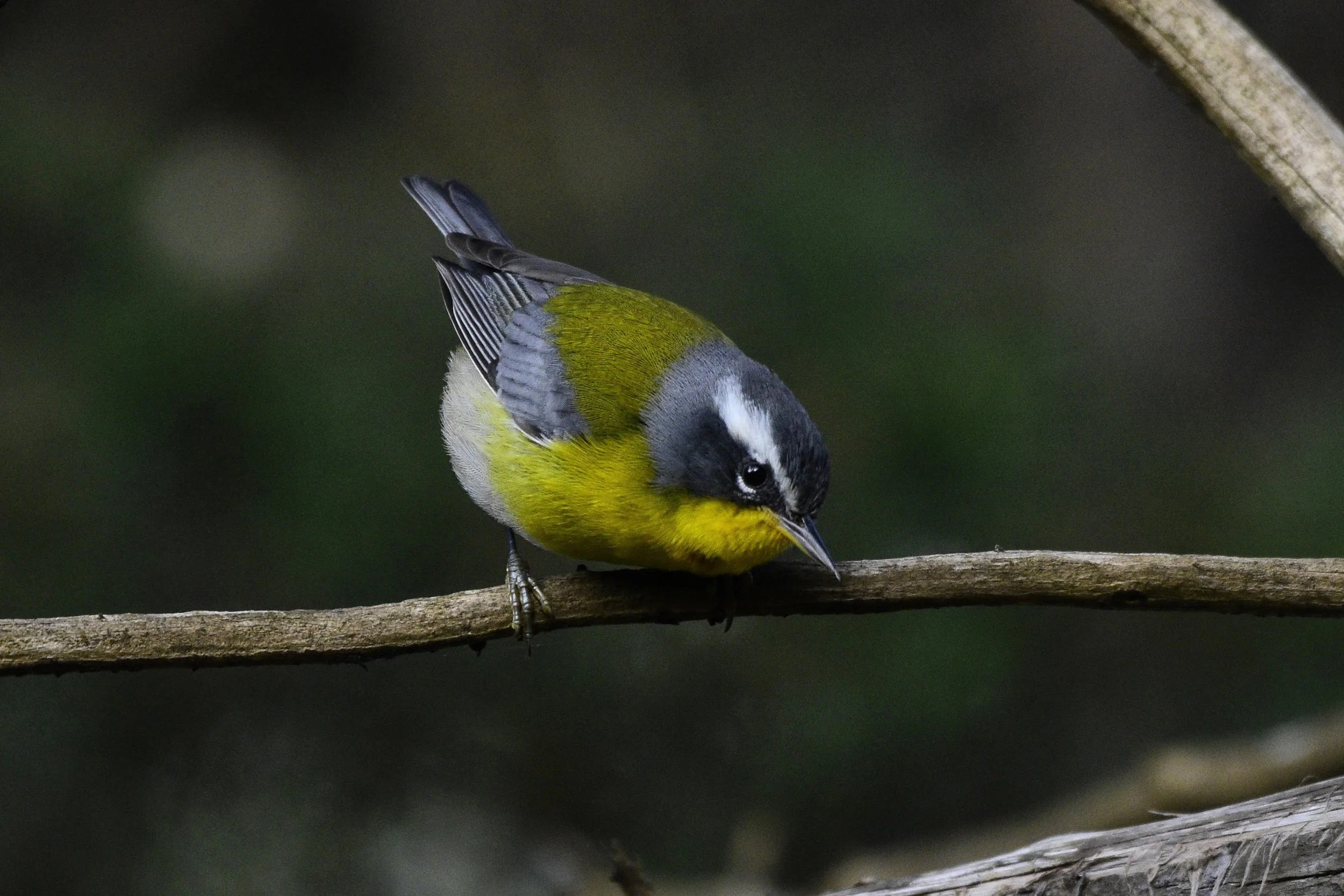
A Crescent-chested Warbler (Oreothlypis superciliosa) on the Cerrito of San Cristóbal, where intense flocks of resident and migrant species alike took advantage of moths trapped by disorienting floodlights. Photo taken October 31, 2022.
In central Chiapas at roughly 2,200 m or 7,200 ft above sea level, the historic Spanish colonial town of San Cristóbal de las Casas sprawls out over its valley, a breakage in the largely forested Chiapas-Guatemala highlands. An environs of cobblestone streets and old two-story buildings, it might not look like a bird haven at first glance. But in the center of this anthropogenic environment, an urban park rises above the brick red rooftops, on a hill locals widely refer to as just the “Cerrito” which means “small hill”. On one side the hill is crowned with an old Catholic Church from colonial times, La Iglesia de San Cristobalito which is a popular tourist attraction.
On the other side, a series of small roads and trails leads to a small outdoor calisthenics gym, a series of cell towers that service the city, and a towering flagpole erected from a brick encirclement, complete with four circular floodlights at the base for extra illumination on the national symbol at nighttime. In between the brick and concrete foundations of the Cerrito, the vegetation matrix is dominated by towering native pine and cypress species as well as planted eucalyptus and the occasional “Shamel” or “Tropical” Ash (Fraxinus uhdei), typical species of the cool equatorial mountain climate.
The small roads and trails are filled with runners and dog-walkers in the mornings, and the small calisthenics gym also hosts a steady stream of exercisers. But amidst this bustle, over October of 2022 I witnessed an unprecedented feeding frenzy of migrant songbird flocks. In the circular pit at the base of the flagpole lay a litter of moth wings, both long dead and still living individuals, of diverse shapes, sizes and patterns. Over the course of four different visits to the site, I photographically documented over 60 genera of moths in this roughly 5 m diameter pit, which are uploaded to the iNaturalist project “Moths of the Cerrito”.
Moth Genera:
Achlyodes
Agylla
Anthanassa
Ascalapha
Bertholdia
Blastobasis
Calledapteryx
Calyptis
Celiptera
Clemensia
Coenipeta
Condylorrhiza
Dichorda
Dysschema
Enyo
Erinnyis
Eudocima
Eupithecia
Feigeria
Halysidota
Hemeroblemma
Heterochroma
Hydroeciodes
Hypercompe
Hypocala
Lipocosma
Lophocampa
Magusa
Mapeta
Maruca
Melanolophia
Melipotis
Mocis
Nemoria
Neophaenis
Nepheloleuca
Pachylia
Palpita
Pantherodes
Pararcte
Protambulyx
Pseudohemihyalea
Pseudosphinx
Salbia
Sericoptera
Sphacelodes
Spodoptera
Templemania
Thysania
Xylophanes
Zale
The masses of migratory songbirds that pass over this narrow part of Mexico every season between their wintering grounds further south and their breeding grounds in the US and Canada, were stopping at this particular location for the bounty of easy moth prey that were trapped in this pit of doom. Each morning I went up to this location, I witnessed multiple feeding flocks totalling over 300 individual warblers. On one mid-morning in particular, on October 26, activity was especially high. I was first drawn into the activity when a newly arrived Palm Warbler (Setophaga palmarum) announced itself loudly with its distinctive squeaky call note, calling incessantly as if to make sure the world knew of its having survived after long travels from the north. Through a casual survey of roughly half of the hill’s summit in an area less than roughly half an acre or 2000 square meters, I came up with a count of 328 individual warblers among plenty of other migrant passerines. Their sharp chip calls rang almost constantly through the bug-filled air, as if approving of the abundance of food at their eager disposal. The vast majority of these were Townsend's Warblers (Setophaga townsendii), but all members of the S. virens clade sound alike by calls (the group of closely related sister species which includes Hermit Warbler, Townsend’s Warbler, Black-throated Green Warbler and Golden-cheeked Warbler). Once I had arrived at the brick flagpole enclosure where moths were littered in all directions, I counted fifteen species of warbler, including the Palm Warbler which soon joined in the feast, now using its remaining energy to stock up on moth protein rather than wasting its voice. The species is quite rare in Chiapas, generally being restricted to just the Yucatan Peninsula for its Mexico distribution.
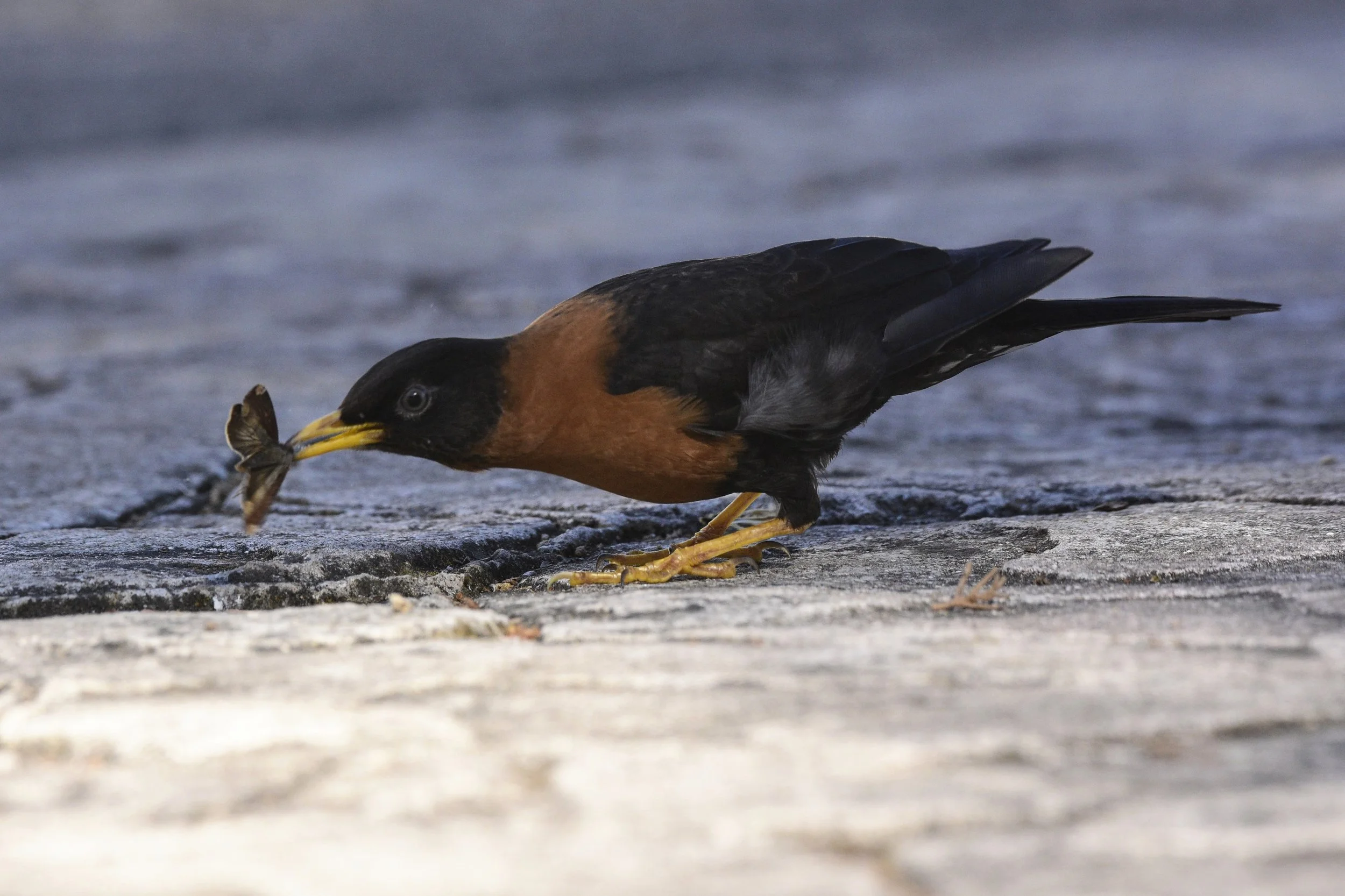
A Rufous-collared Robin (Turdus rufitorques) beats its moth prey against the cobblestones, near the foot of the Cerrito’s monument flagpole. Photo taken October 30, 2022.
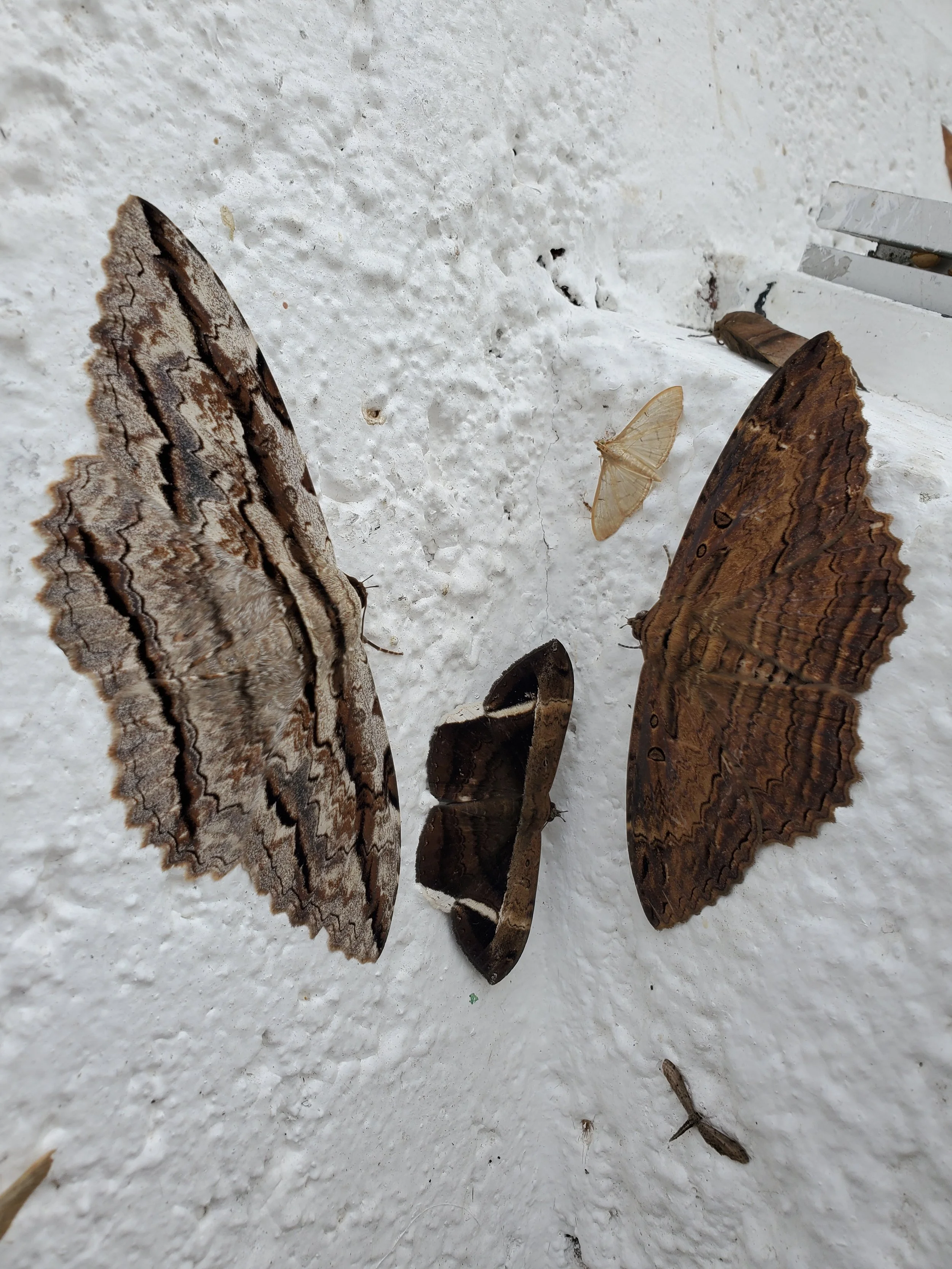
An Owl Moth (Thysania zenobia) on the left, with five other species of moths crowded on the plastered walls at the base of the Cerrito’s flagpole. Photo taken October 18, 2022.
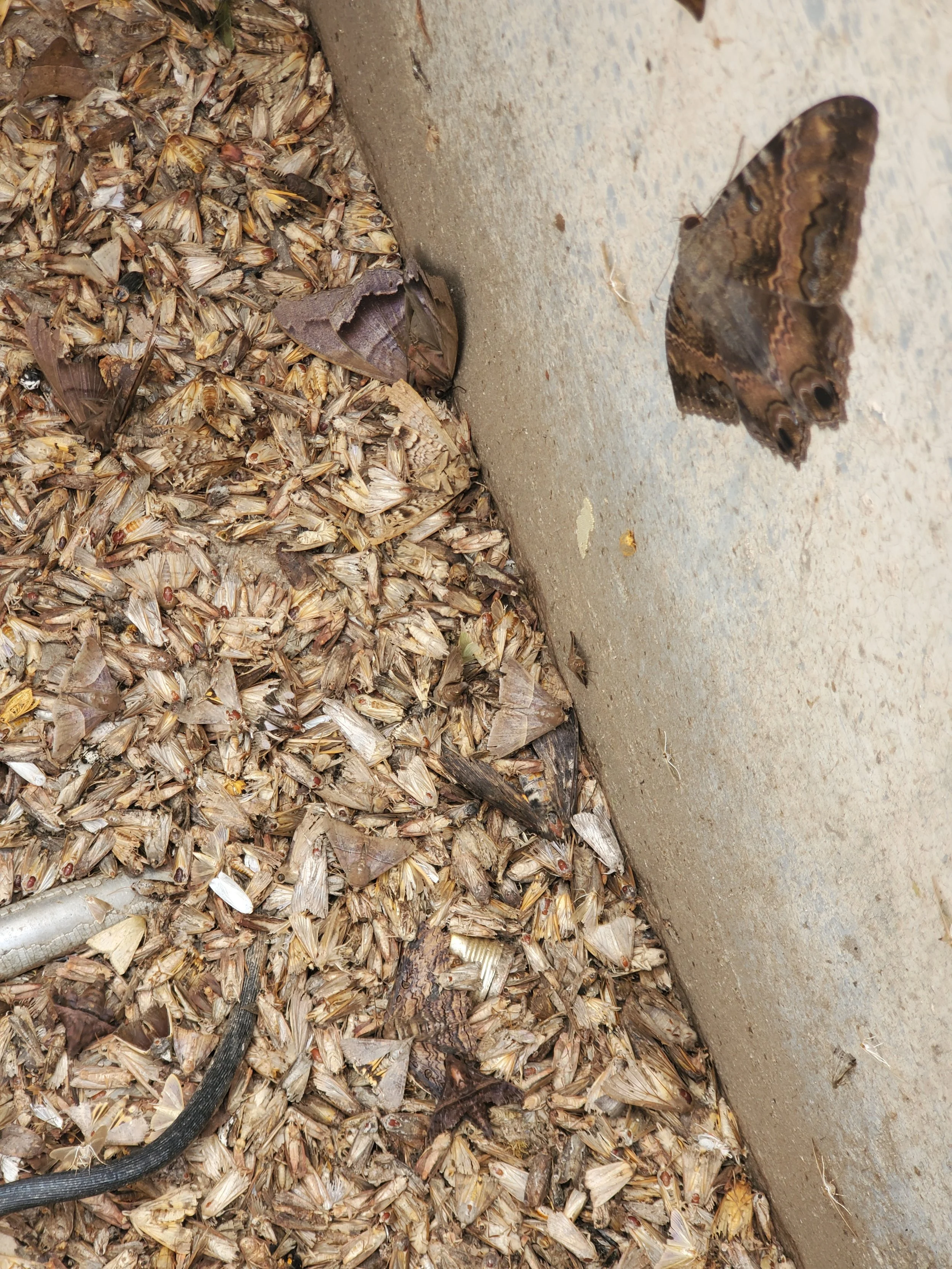
The pit at the base of the Cerrito flagpole is littered with a layer of both dead and living moths. Moths become disoriented by large lights, and the impression in the ground here seems to add to the trapping efficiency of these bugs. But the most intense moth activity here seemed to align well with local peak bird migration, as the number of living moths I found here staggeringly diminished over the course of November. Photo taken October 18, 2022.
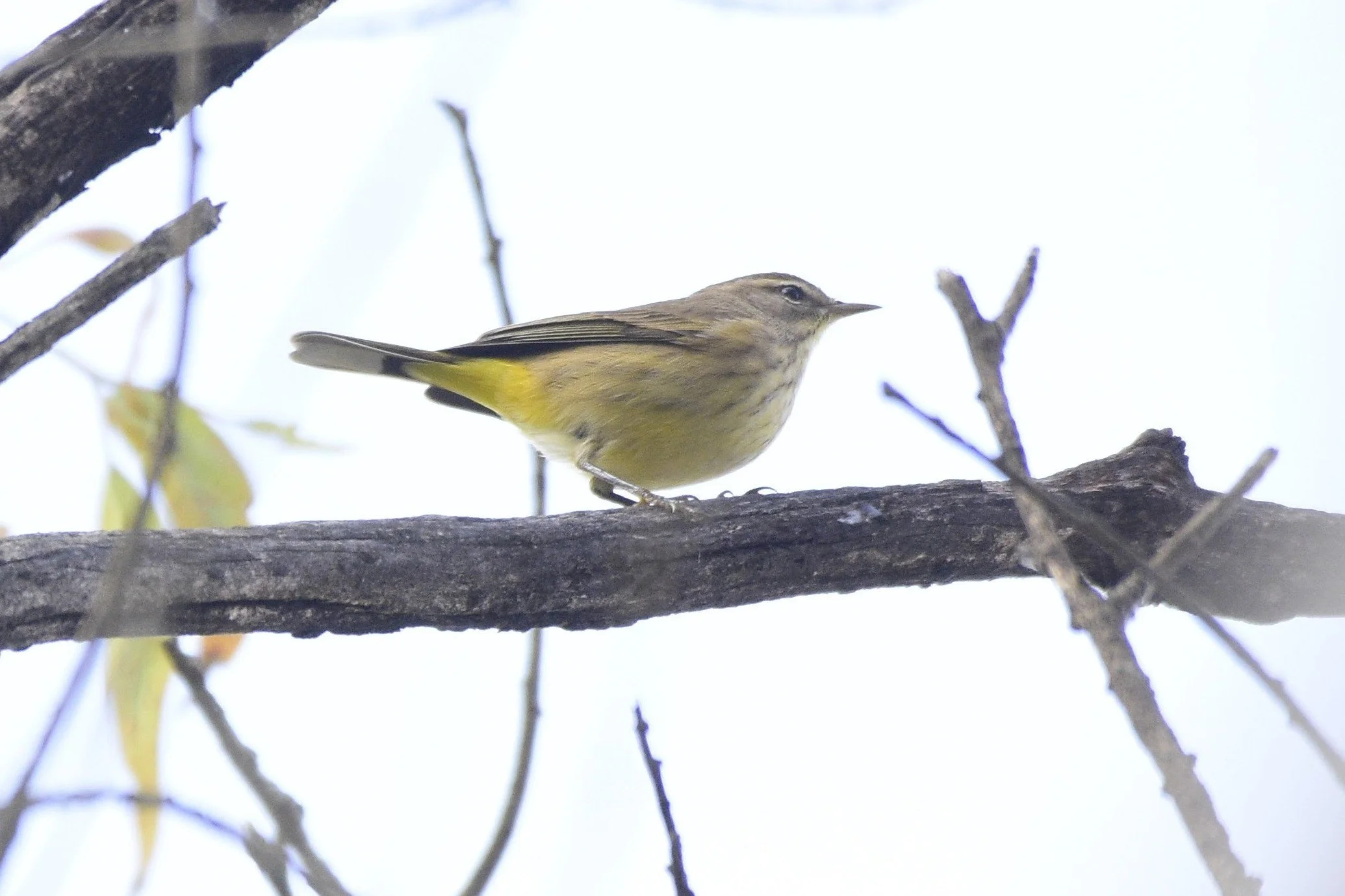
A Palm Warbler (Setophaga palmarum) discovered the feast, joining the frenzy in late October. This species is quite rare in Chiapas, normally wintering closer to the caribbean. Photo taken October 26, 2022.
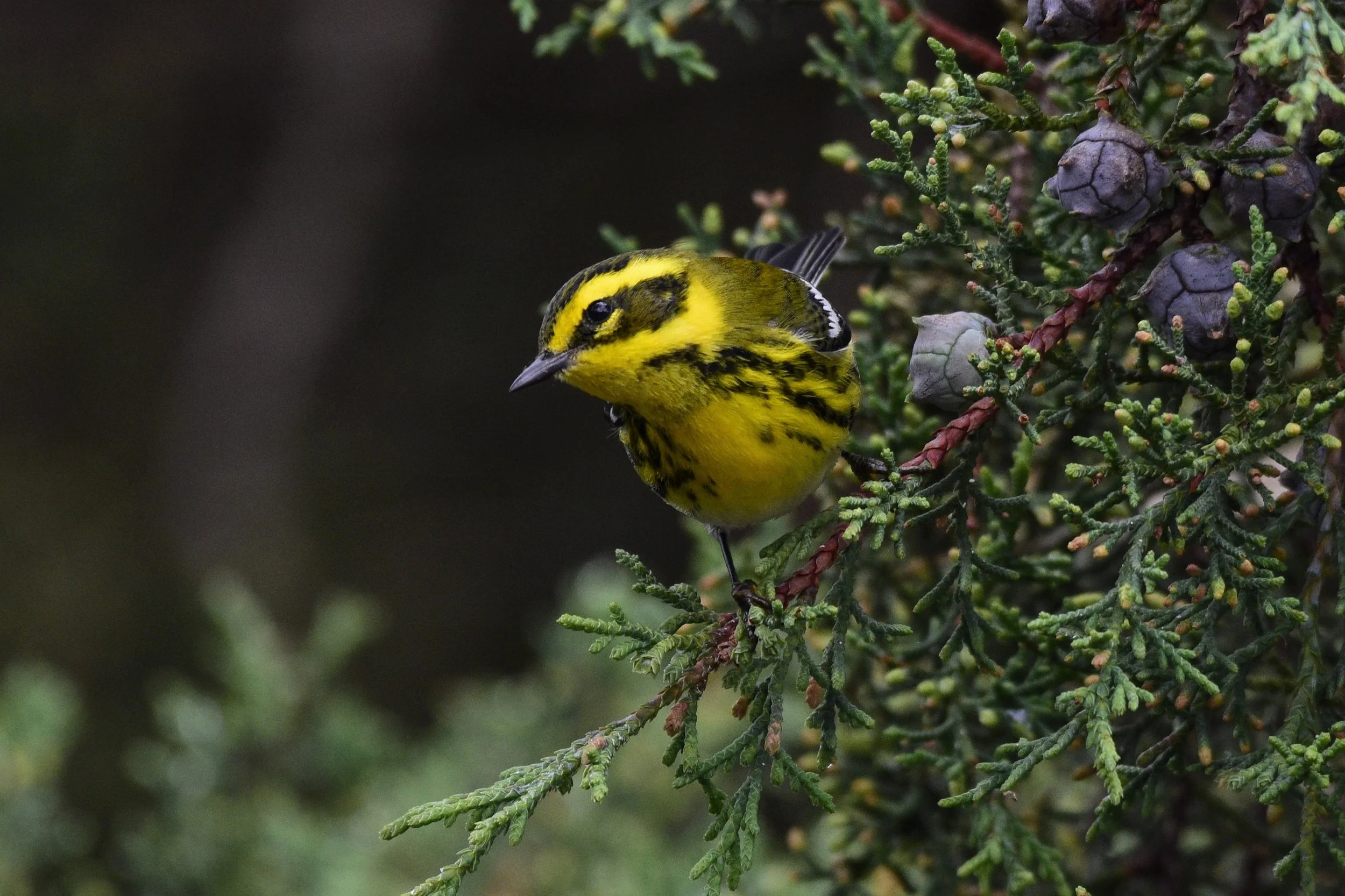
A Townsend’s Warbler (Setophaga townsendii) male looks up from foraging in a native cypress on the Cerrito. This is the most abundant bird species on the Cerrito, with upwards of 100 individuals present in the park on most days. Photo taken October 7, 2022.
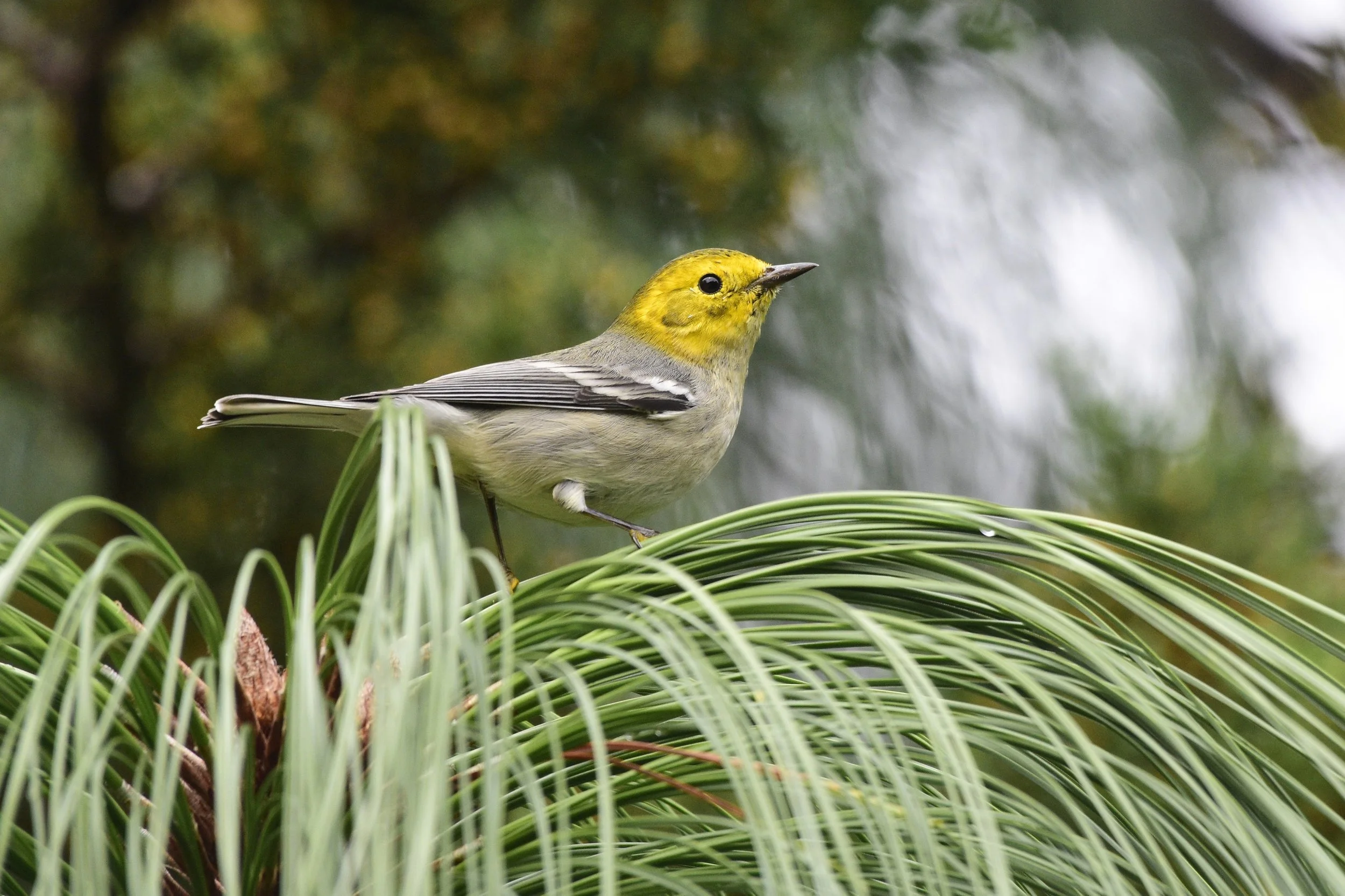
A Hermit Warbler (Setophaga occidentalis) female on the Cerrito. This species is closely related to Townsend’s Warbler but winters in this area in smaller numbers. Photo taken October 18, 2022.
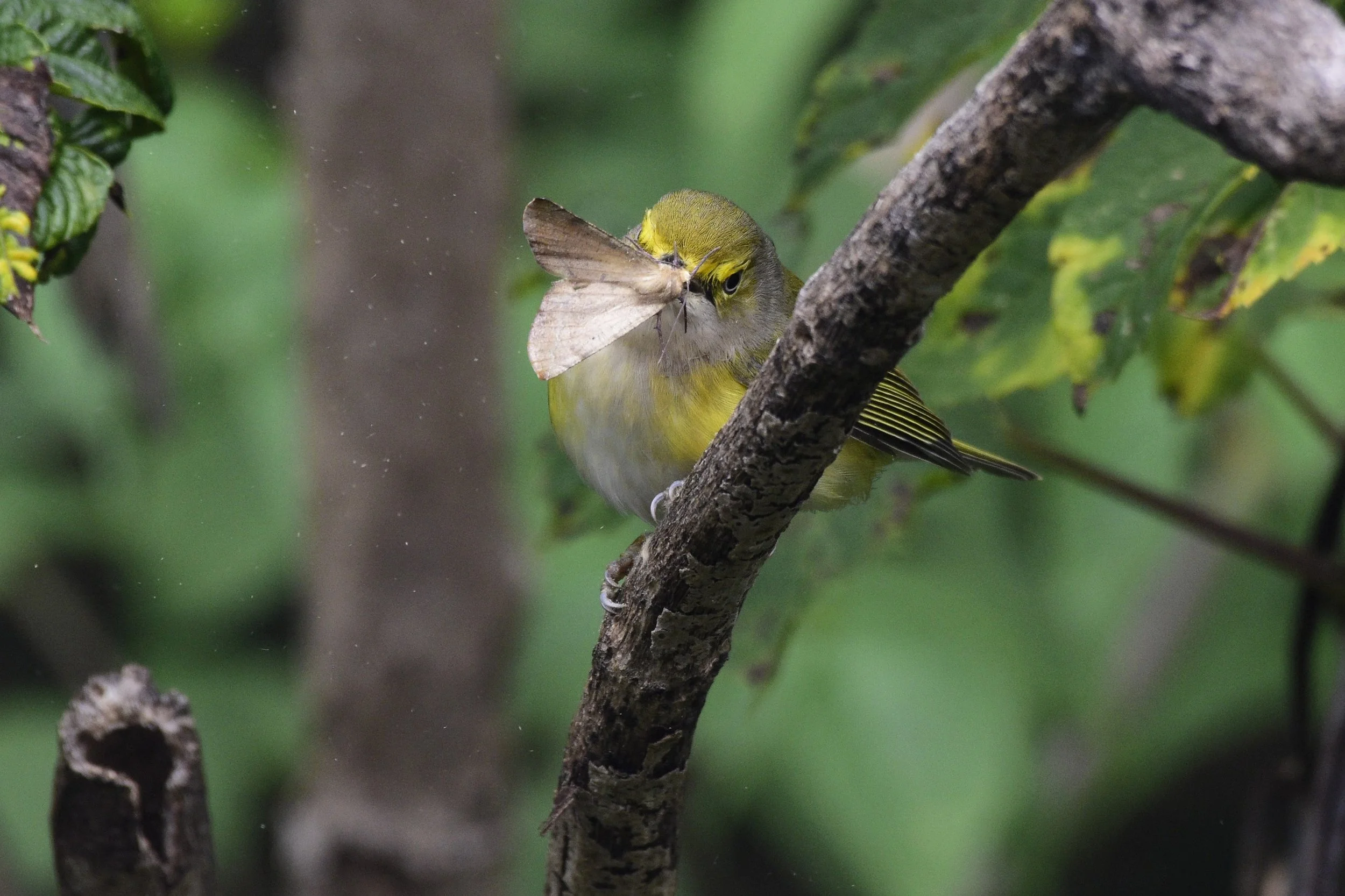
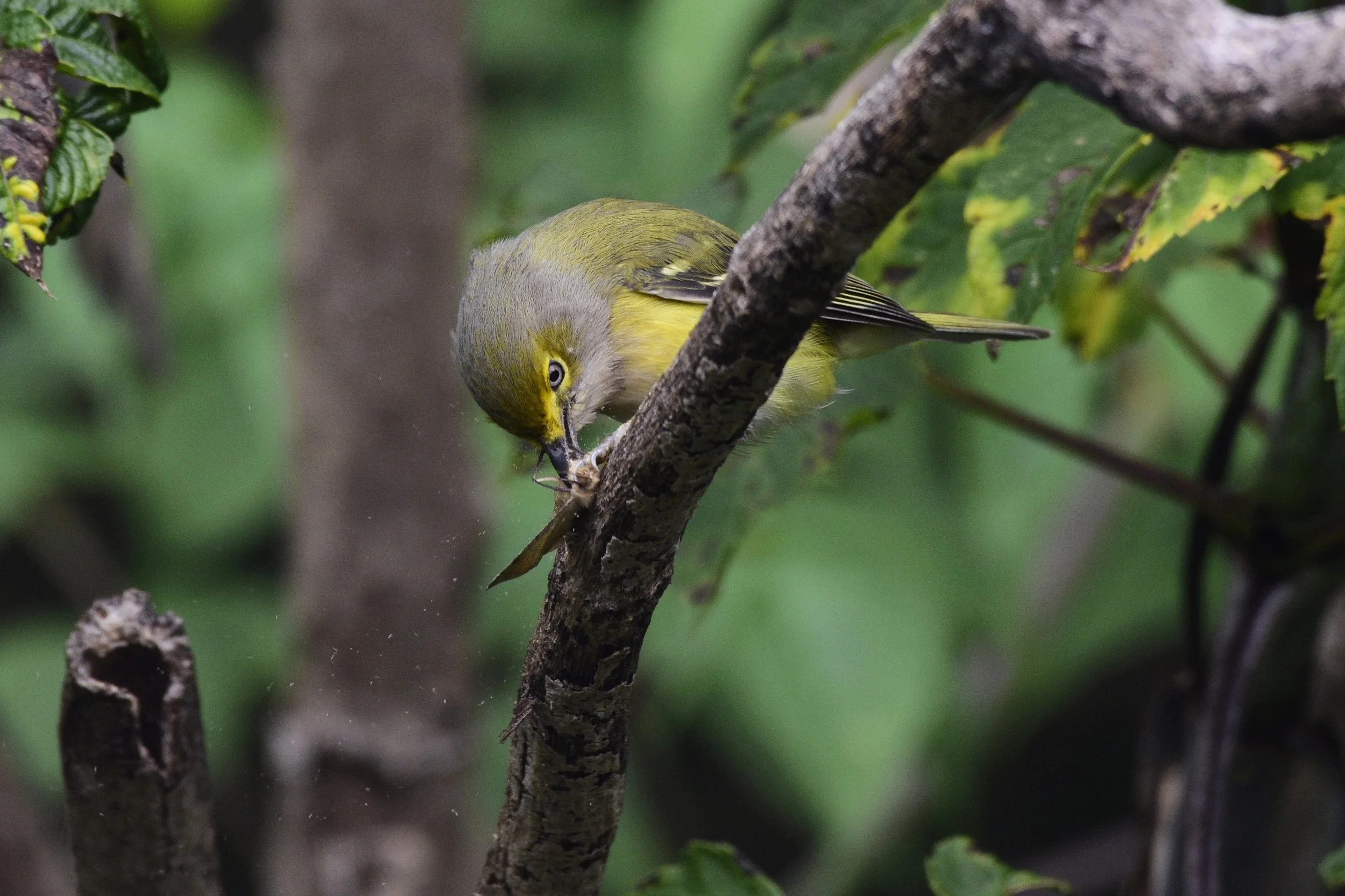
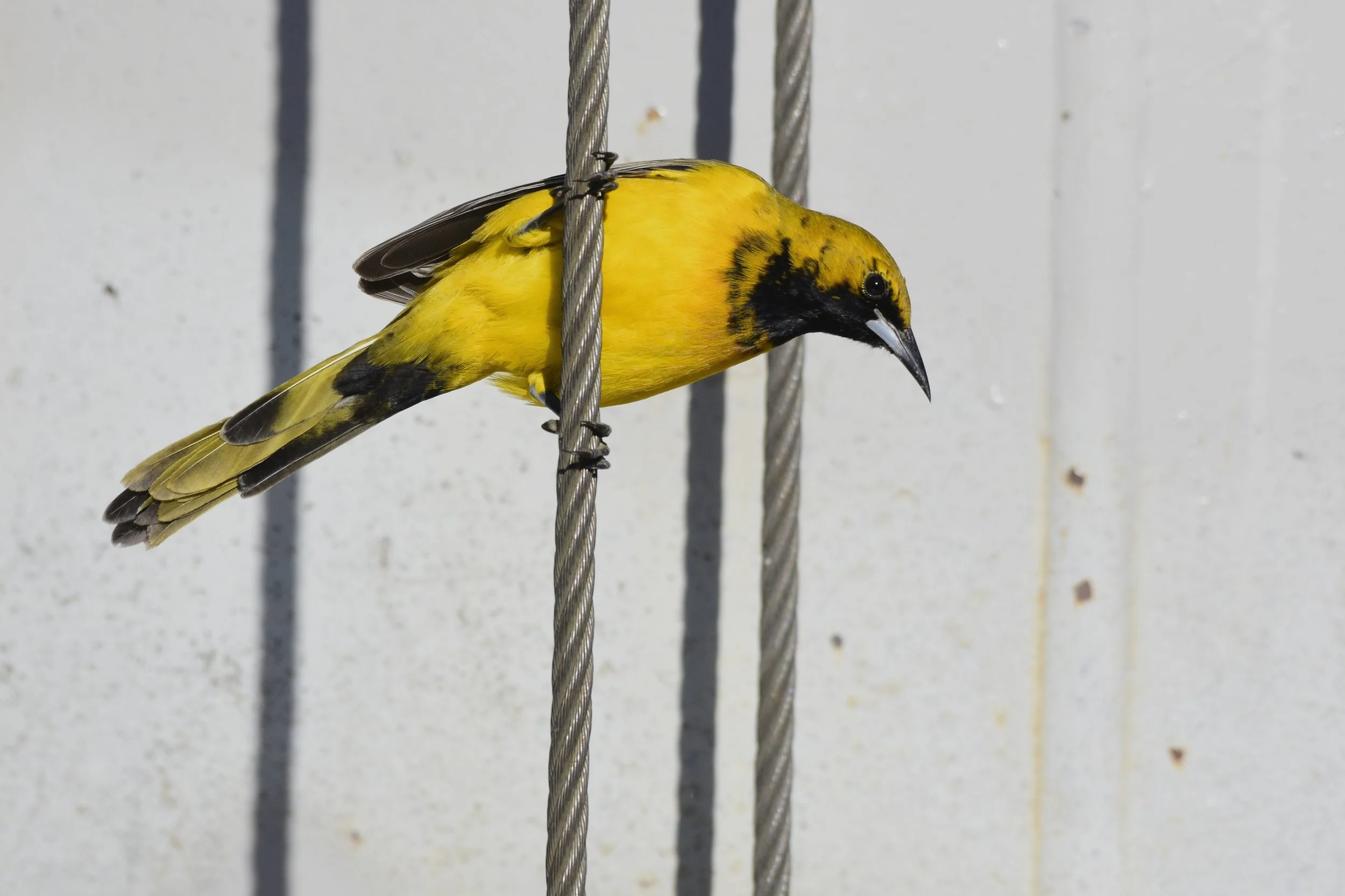
A young male Yellow-backed Oriole (Icterus chrysater) investigates the base of the flagpole for a quick and easy meal of the hundreds of disoriented moths. Photo taken October 26, 2022.
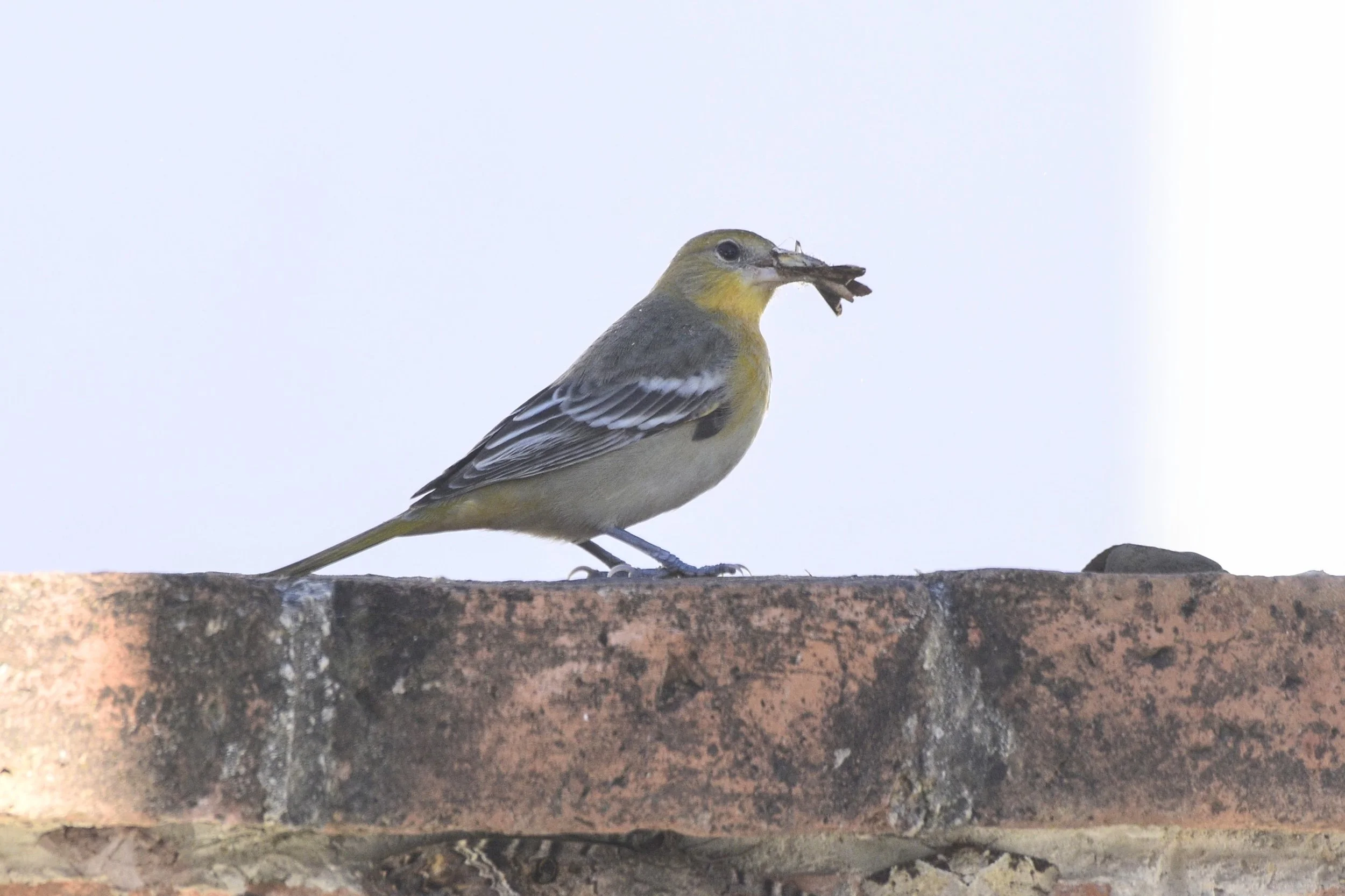
A female oriole (Baltimore or Bullock’s) (Icterus galbula/bullockii) with her moth snack above the pit of moth carnage. Photo taken October 26, 2022.
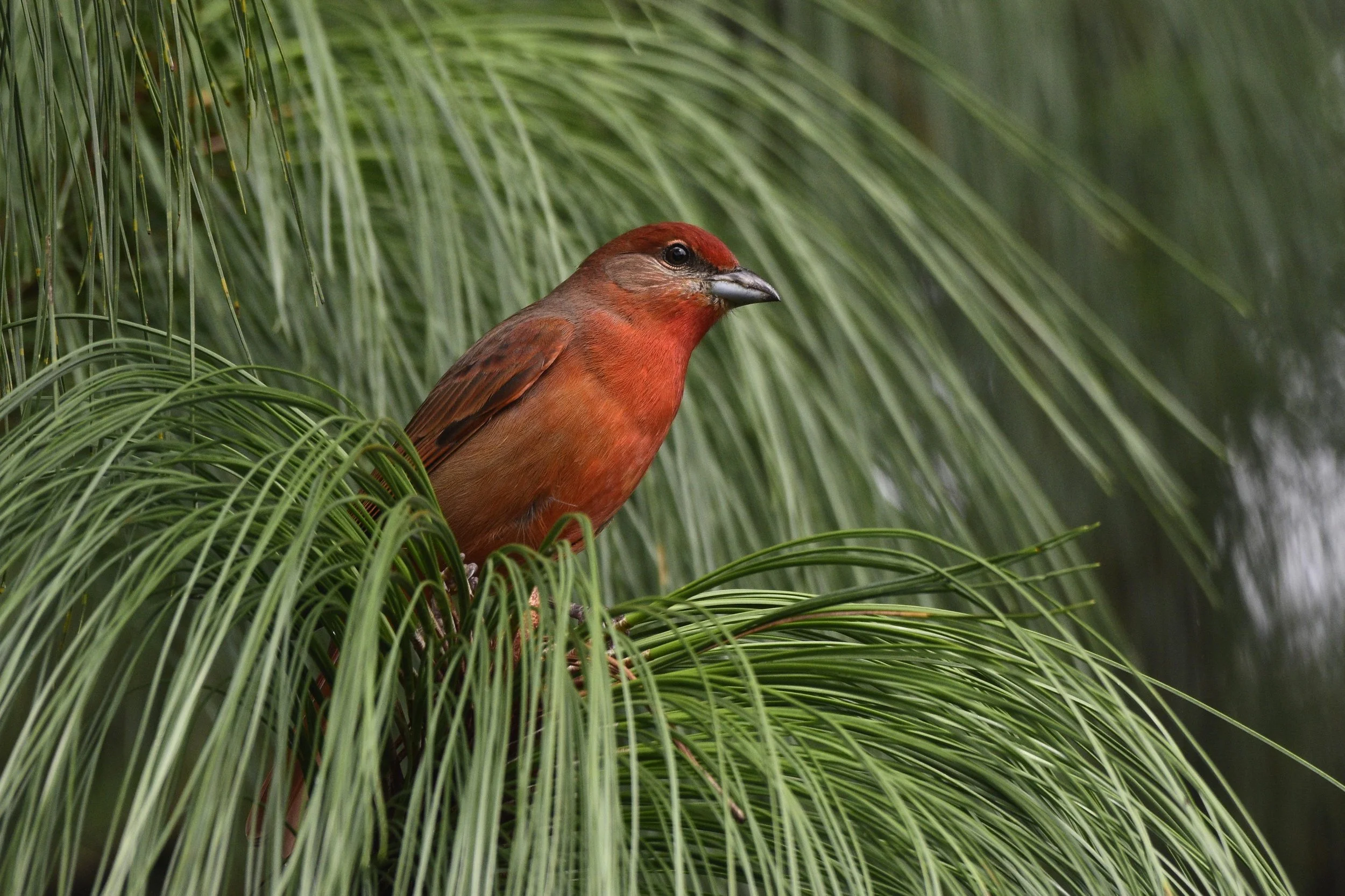
A Hepatic Tanager (Piranga flava) cautiouslty investigates the moth feast at the flagpole from the discreetness that the long needles of this native Montezuma Pine (Pinus montezumae) provides. Photo taken October 18, 2022.
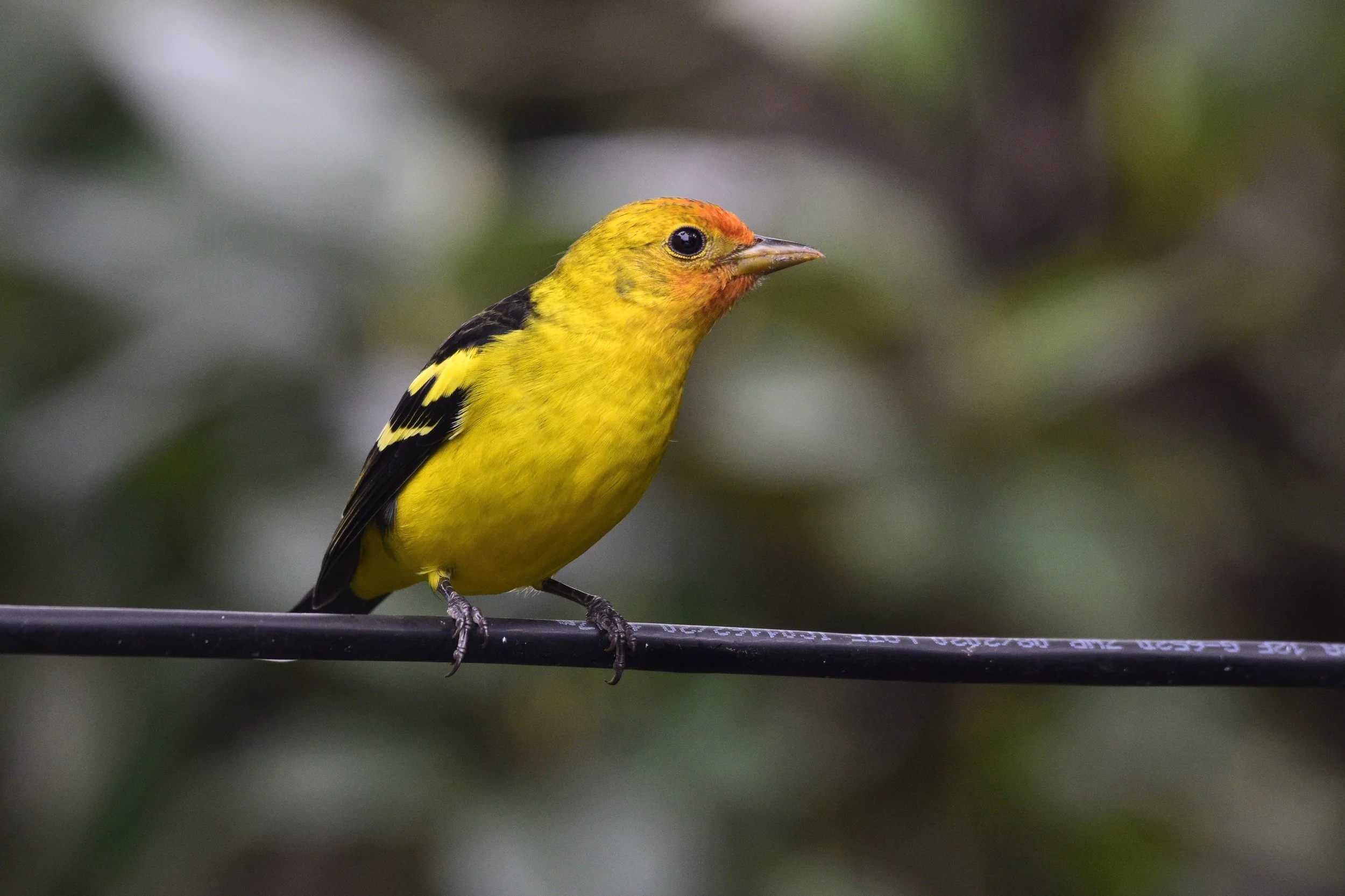
Western Tanagers (Piranga ludoviciana) like this non-breeding male are the most abundant non-warbler at this location. Photo taken October 18, 2022.
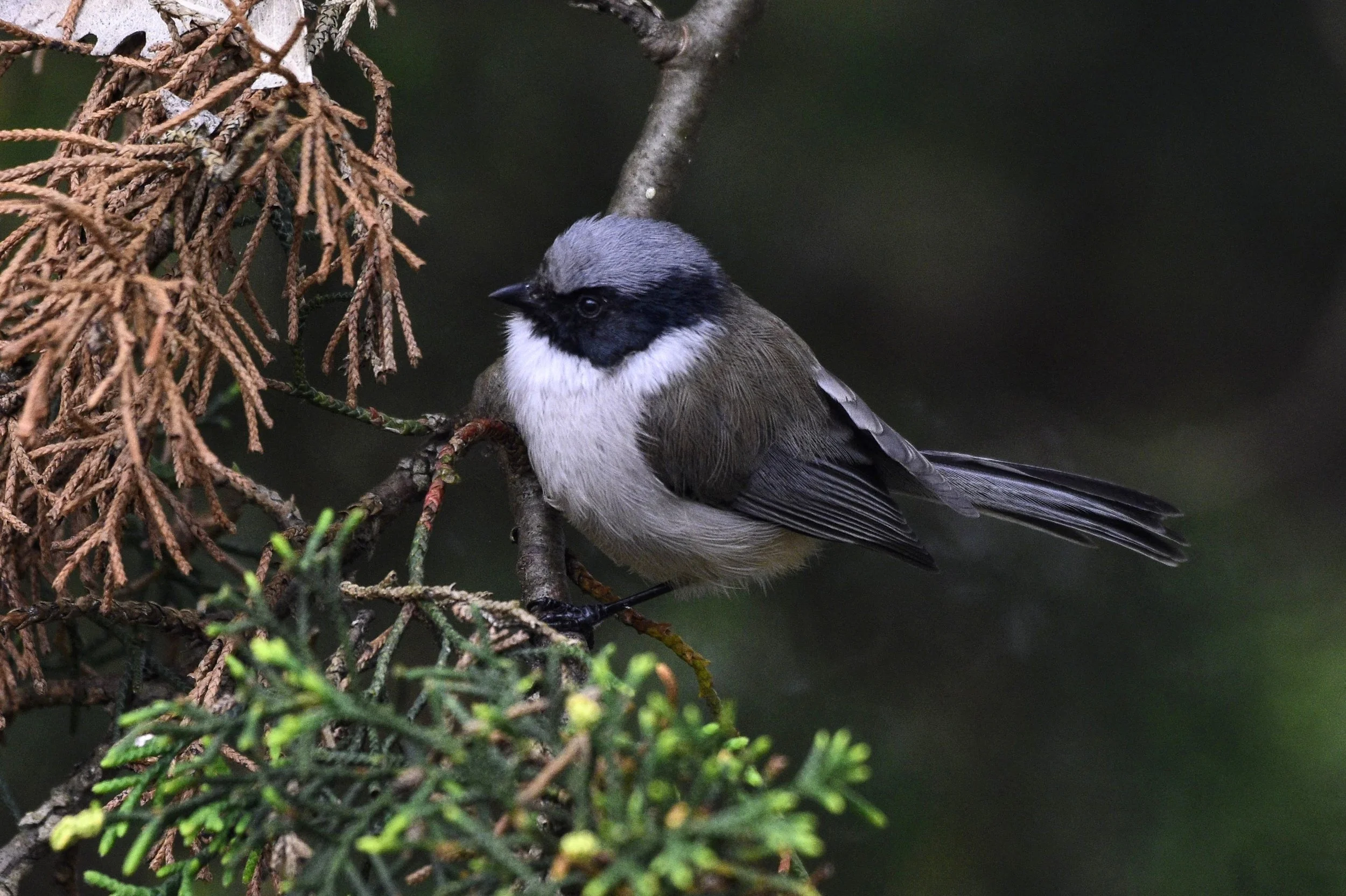
A male Bushtit (Psaltriparus minimus), gleening through one of the native cypress trees. All male Bushtits in Chiapas wear this striking bandit-like “black-eared” plumage, in contrast to Bushtits in the northern part of the species’ range in Canada and the US. Photo taken November 6, 2022.
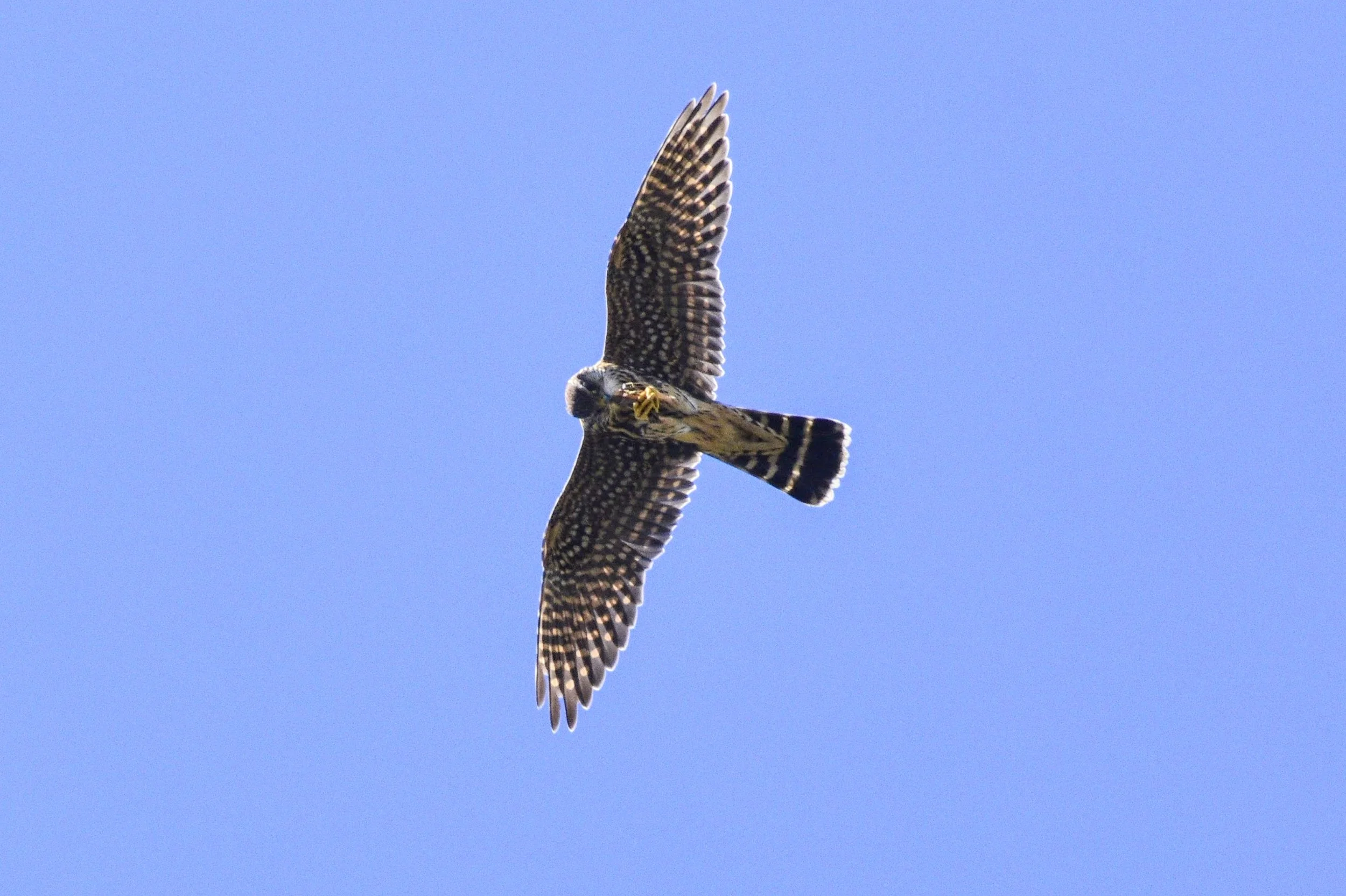
A female Merlin (Falco columbarius), feasting on moths after her journey from breeding grounds more than 3000 km away. One of several of this species that stopped by for multiple days before presumably resuming course to winter even further south. Photo taken October 26, 2022.
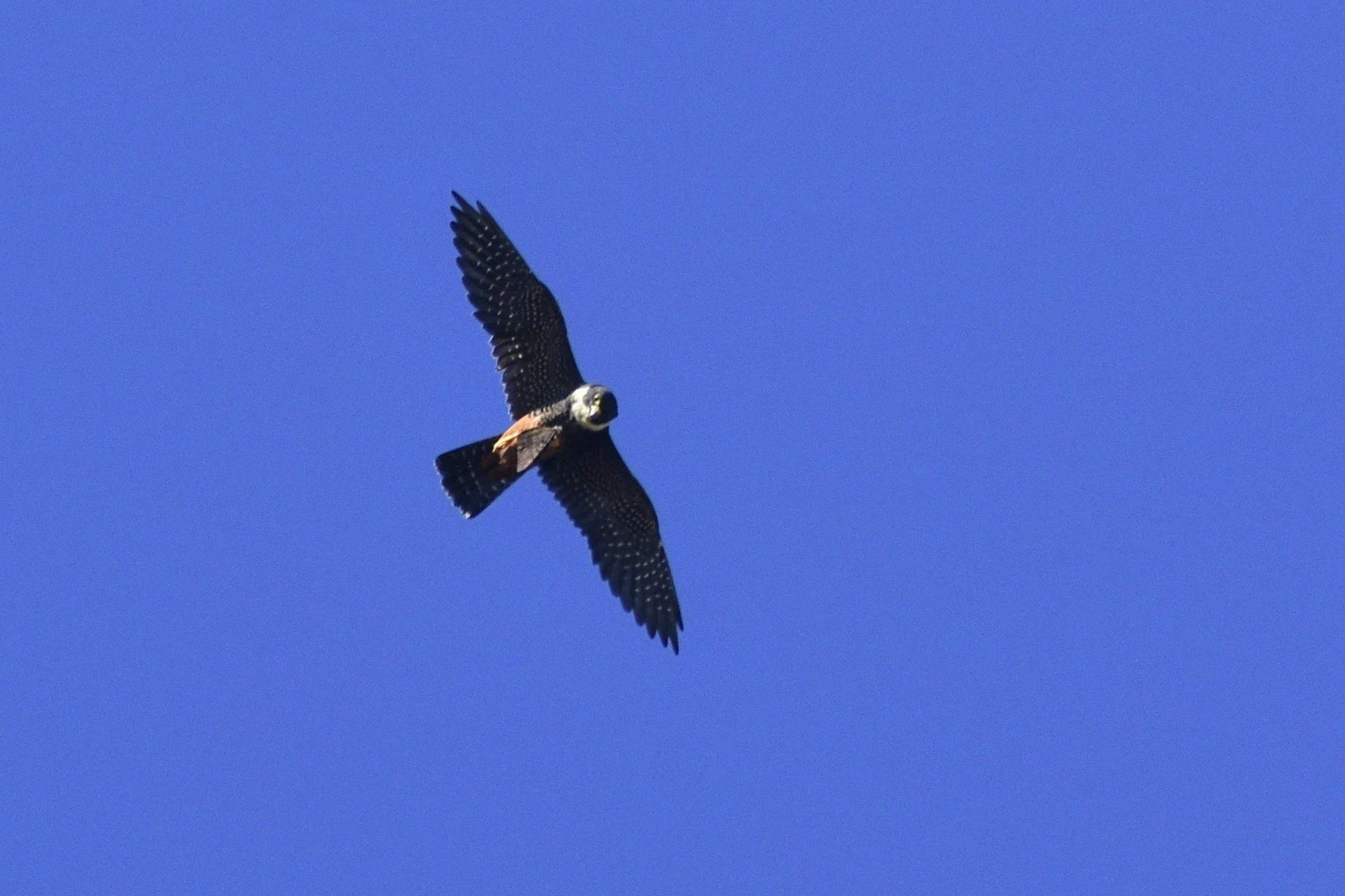
Even a Bat Falcon joined the feast for several days, hunting moths in flight from its perch among the tops of the adjacent cell towers, and swooping in for a kill like in this image, where it has successfully tackled a Black Witch moth (Ascalapha odorata). Bat Falcons are generally birds of tropical lowlands, so when this bird showed up in chilly San Crisóbal, several local birders chased it over the course of four days. Photo taken October 26, 2022.
Because of its primed latitude and narrow geography, southern Mexico acts as a bottleneck for migrating birds whose migration routes are solely land-based; meaning those that don’t cross the Gulf of Mexico to and from breeding grounds in North America, and instead follow the Mexican and Central American landmass. Chiapas sits at the center of this attention with its position directly along the North American central flyway for species that migrate across the US great plains and down the Texas and Mexico Gulf Coast. Due to enormous bug-attracting lights and mature, dense vegetation in an otherwise anthropogenic environment, the Cerrito park in the middle of San Cristóbal de las Casas does an extra good job at concentrating stopover migrants. At any one time in October, hundreds of moths were trapped in the brick flagpole encirclement providing an easy bounty of prey for hungry and exhausted bird migrants. This provides a fascinating example of how anthropogenic influences help concentrate numbers of migrating (and local) songbirds where they would otherwise be more evenly distributed, and exposes a hidden gem for birdwatchers seeking to get some intense terrestrial bird action in Chiapas.
ReferencesCabrera-Cruz, Sergio A., Mabee, TM, Villegas-Patraca R. “Patterns of nocturnal bird migration in southern Mexico.” Revista Mexicana de Biodiversidad. Volume 88, Issue 4, December 2017, Pages 867-87915. Sullivan, B.L., C.L. Wood, M.J. Iliff, R.E. Bonney, D. Fink, and S. Kelling. 2009. eBird: a citizen-based bird observation network in the biological sciences. Biological Conservation 142: 2282-2292. Tonnessen, David. 2022. eBird Checklist: https://ebird.org/checklist/S121349295. eBird: An online database of bird distribution and abundance [web application]. eBird, Ithaca, New York. Available: http://www.ebird.org. (Accessed: November 18, 2022).