Chiapas Lowlands Birding, March 2023
In the middle of March, a hardy group of students and birders first submerged into the depths of the eastern Chiapas jungle (La Selva Lacandona) near Guatemala, and then barely 4 days later found themselves on the complete opposite end of the Mexican state. Long driving, four-hour nights, minimum accommodations, in the name of what? All for the birds.
For me, this was an opportunity to further familiarize myself with the ecology and personalities of the megadiverse avifauna in southern Mexico.
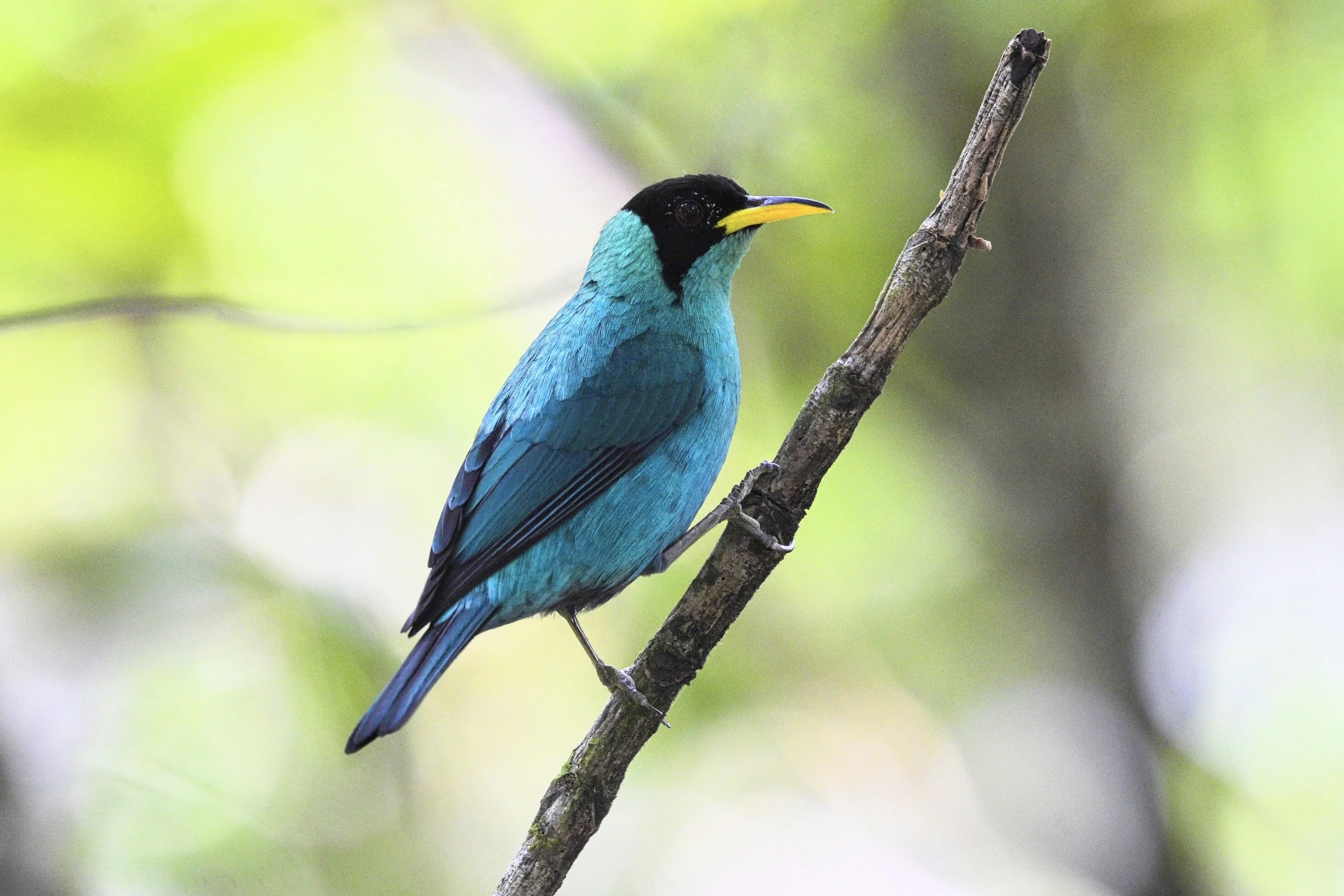
This male "Green" Honeycreeper (Chlorophanes spiza)…
popped down below the canopy for its picture for a few short seconds while I was camera-ready for Green Shrike-Vireos. It's really a turquoise if you ask me, but I guess they're green compared to males of other honeycreeper species. It's also a monotypic genus, meaning there are no other species of Chlorophanes--makes me curious what their relationship is to other honeycreepers and tanagers in Thraupidae, phylogenetically speaking.
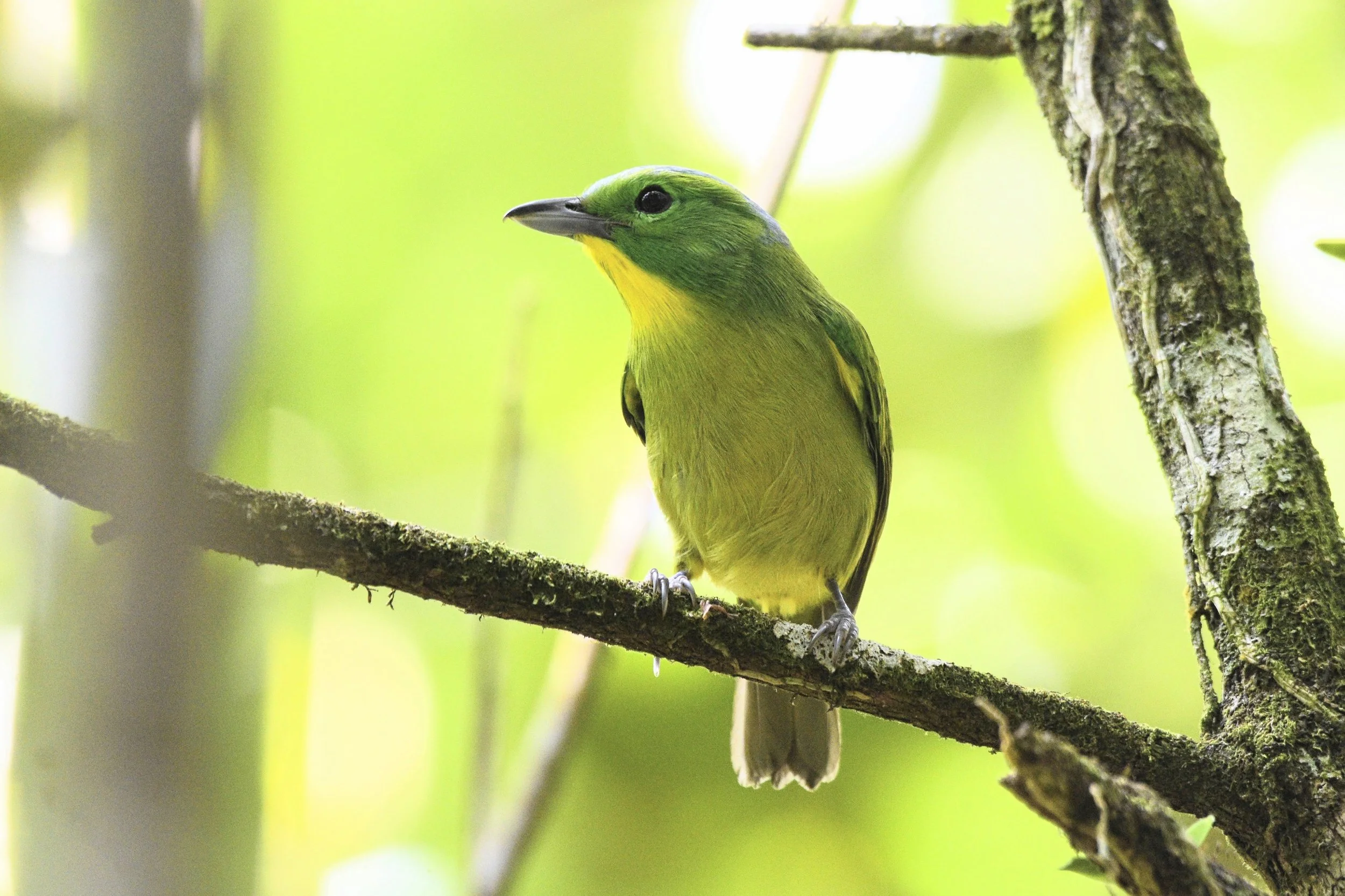
I've now gone years birding the jungles of Mexico and Central America without ever seeing a Green Shrike-Vireo (Vireolanius pulchellus). Until we lucked into a pair, two days in a row on opposite sides of Chiapas, one of these locations being one I'd already birded twice in the past. That's one of the beauties of jungle birding, I guess.
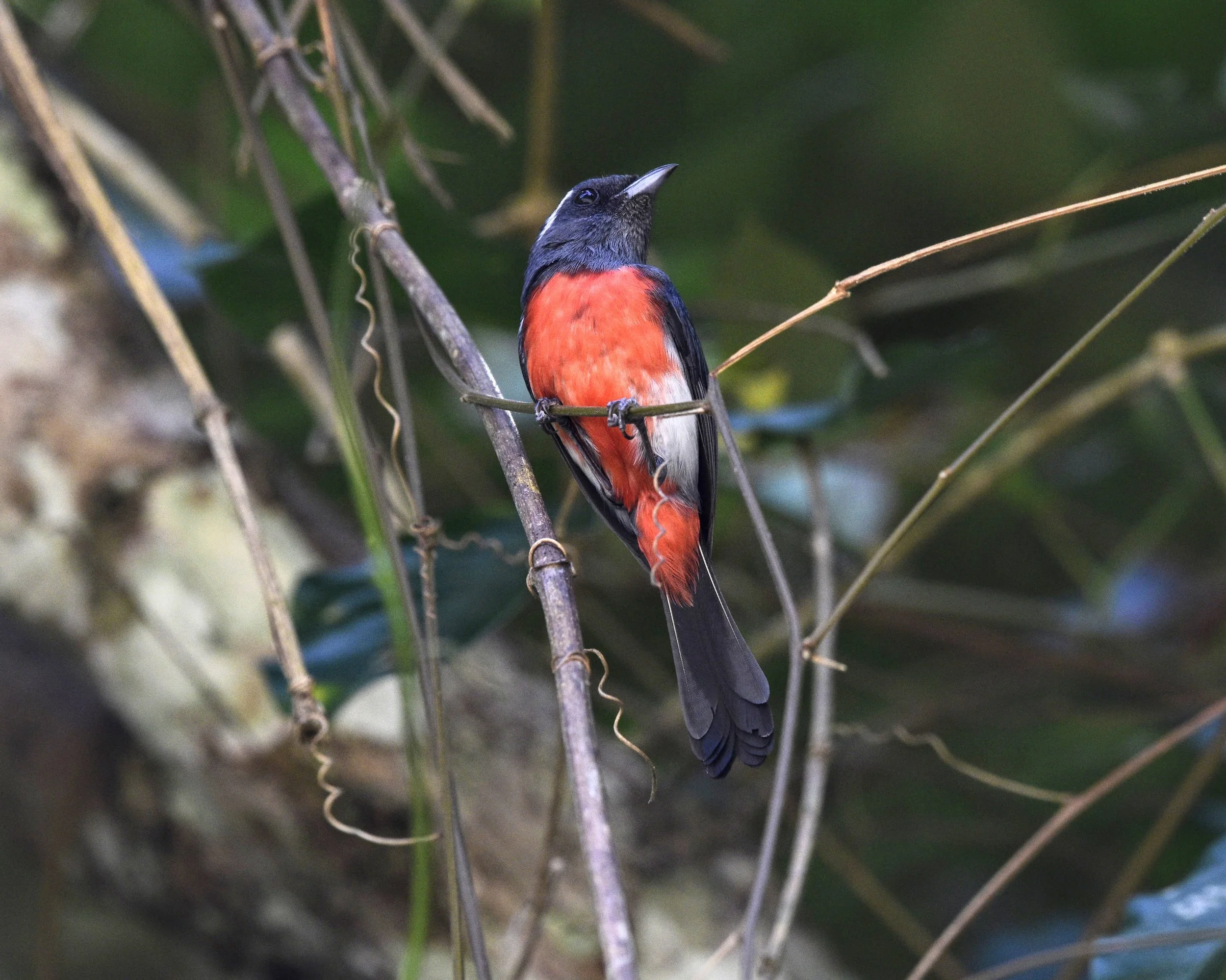
A species low on my radar but high on my list of welcome surprises…
a Gray-throated Chat (Granatellus salaei) in the jungle near Guatemala. This is actually nowhere related to the Yellow-breasted Chat, but instead in Cardinalidae with Northern Cardinal, North American buntings and Pheucticus grosbeaks. Two of the three species of Granatellus are found in Mexico, separated by the highlands. Gray-throated Chat is found on the jungle slopes facing the Caribbean, while Red-breasted Chat is found in the drier forests facing the pacific slope. Just two days after encountering this Gray-throated Chat, we heard the sweet singing of a Red-breasted Chat on the pacific slope, but never saw it.
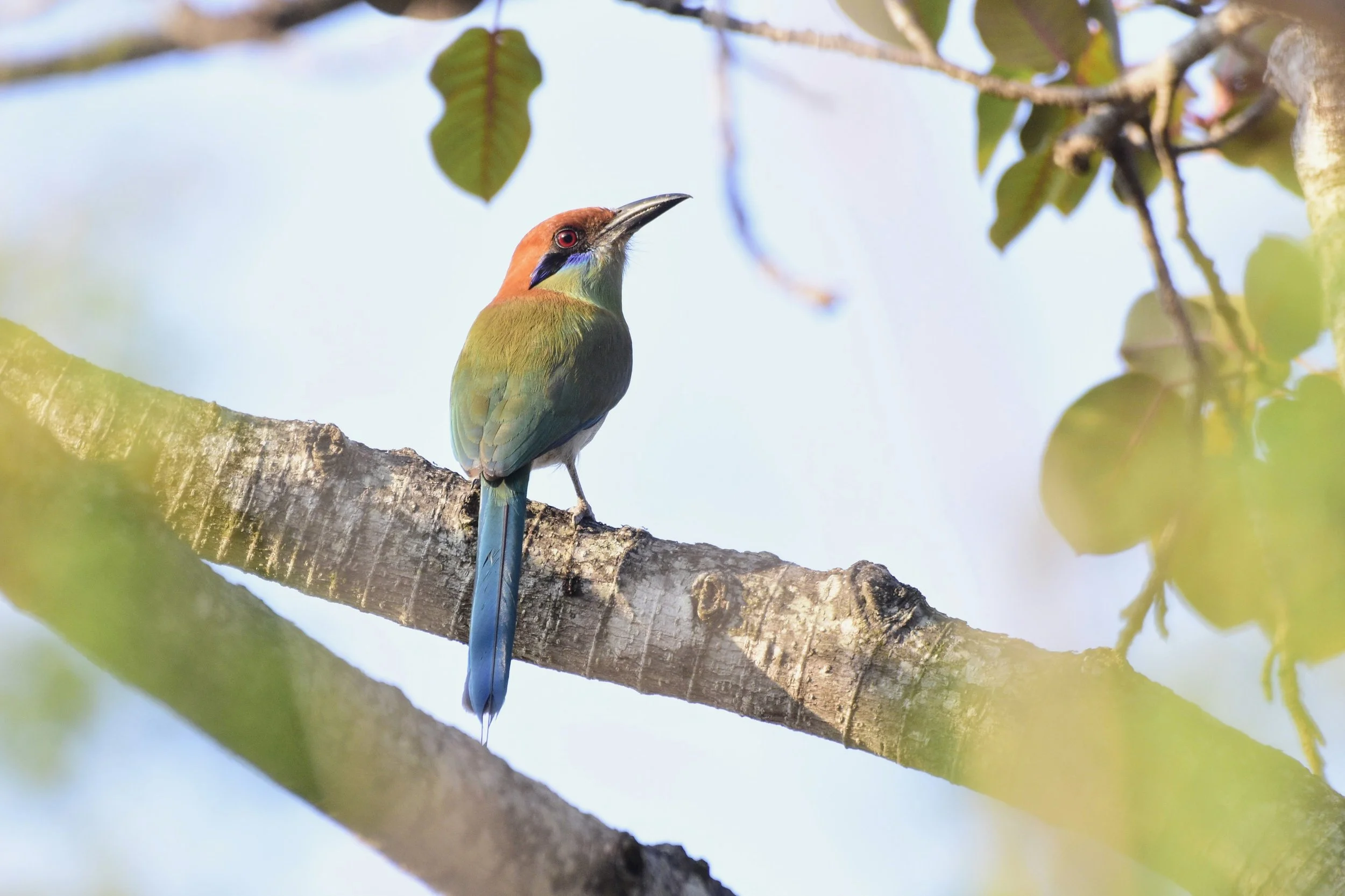
“Rufous?” “No, Russet.” “Capped?” “No, crowned.” This is a Russet-crowned Motmot (Momotus mexicanus), but you can see why there's sometimes so much confusion in bird names. Particularly when the use of "crowned" versus "capped" in this species affirms that there's no logic in whether a species is named one or the other. Most "crowned" species have a band or crown of color on the head, with the top being of another color, while "capped" is a single solid color for the top of the head. But as you can see, this species has a solid rufous/russet cap with no other color on top. But we still call it "crowned".
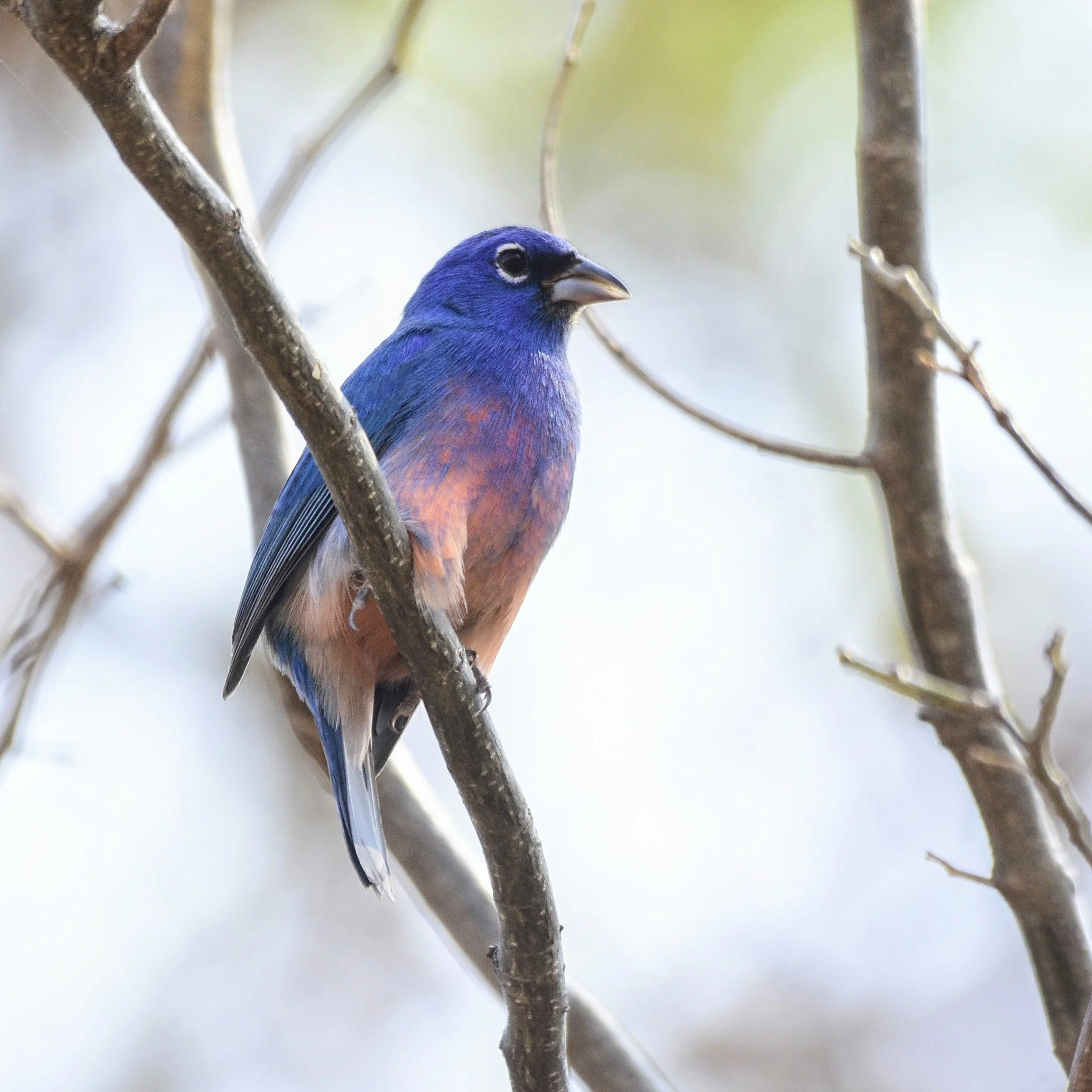
Rose-bellied or "Rosita's" Bunting, male. Passerina rositae…
A classic and must-see for southern Mexico, this species is endemic to just the coastal lowlands of Oaxaca and western Chiapas, and is widely used for advertising eco and avi-tourism to this incredible region.
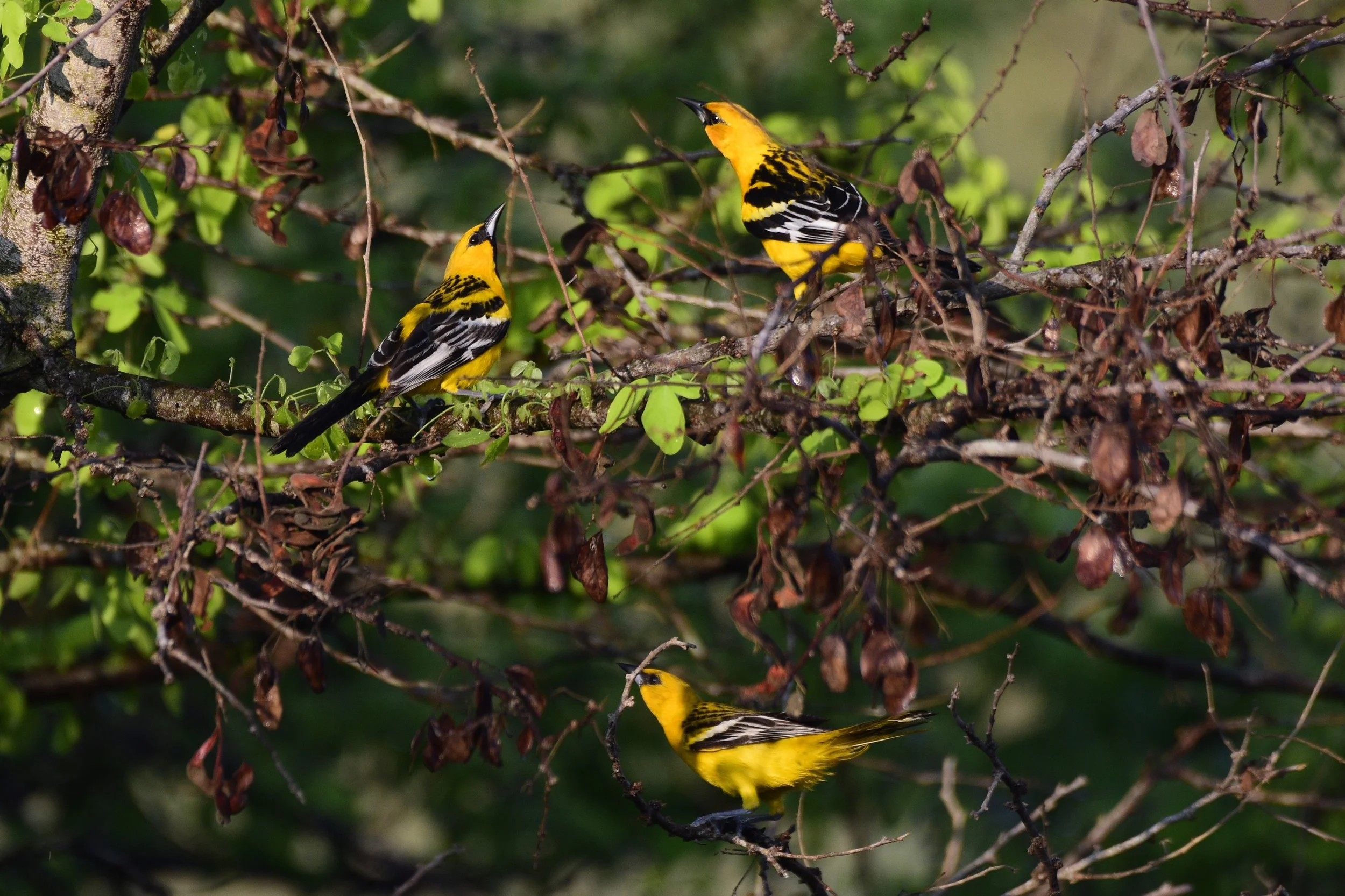
Each time I see Streak-backed Orioles (Icterus pustulatus) in Chiapas or the southern part of their range, it strikes me more than the last time how different they look than those of West Mexico and those that show up in the US. That's because they're a different, considerably yellower subspecies. I do wonder if this could result in a species split somewhere in the future.
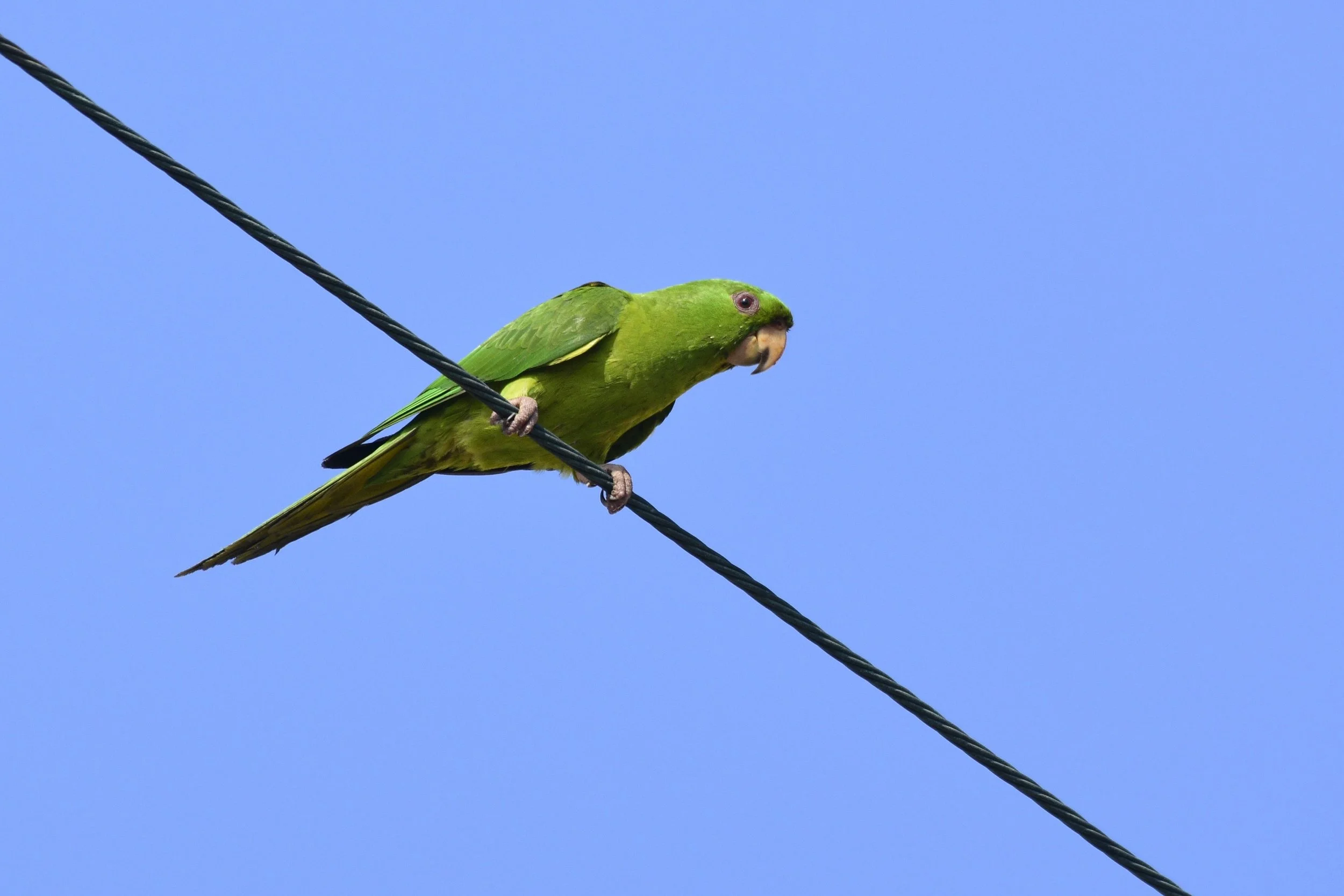
Pacific Parakeet (Psittacara holochlorus)…
I still don't know whether to feel guilty or smugly contumacious on the fact that I never really versed myself in Psittacara ID. I always felt that it was a genus that so-happened to receive more intense scrutiny than other genera of parakeets, therefore resulting in excessive splits such as the Pacific Parakeet (from Green Parakeet), kind of like what happened with Empidonax and splitting Pacific-Slope and Cordilleran Flycatchers...
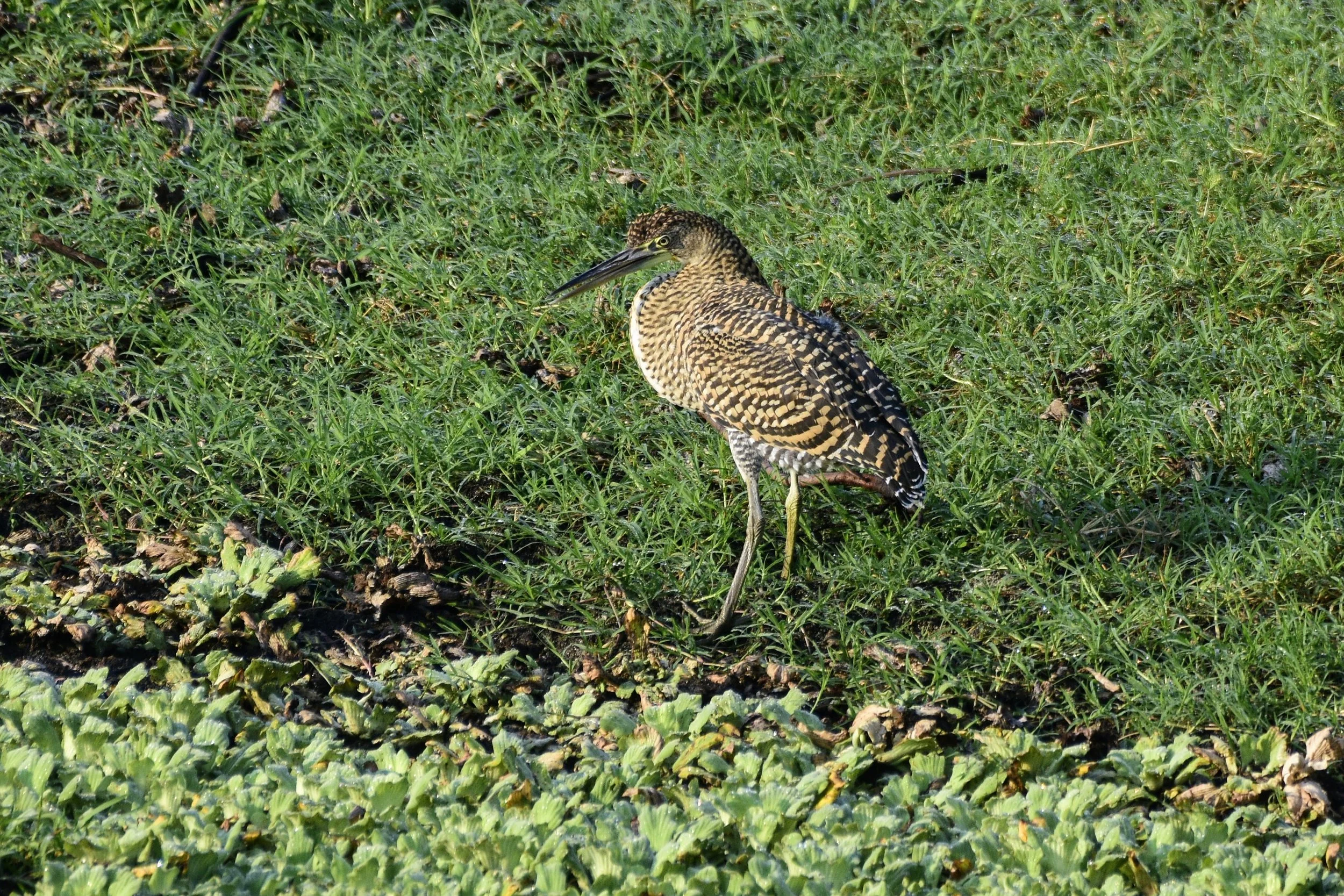
Those of us looking at the patterns on this juvenile Bare-throated Tiger-Heron were impressed by how it puts the "tiger" in tiger-heron arguably better than adults in the species.

Northern Jacanas (Jacana spinosa)…
There's a very simple aesthetic to this species' wing pattern.
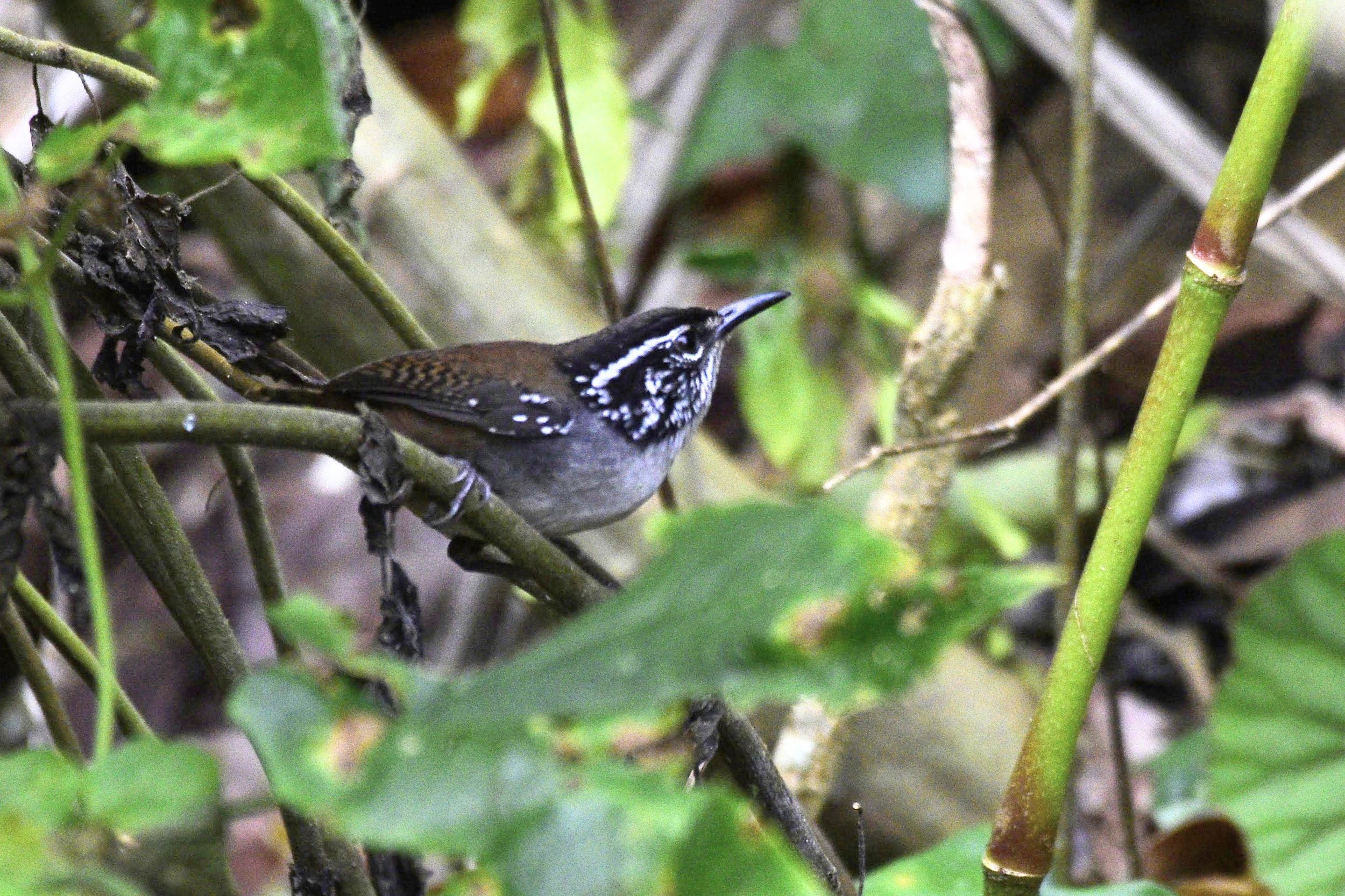
White-breasted Wood-Wren (Henicorhina leucosticta)…
A wide-ranging jungle species with many regional subspecies and song dialects, and a distinctive alarm call reminiscent of vehicular reversing.